
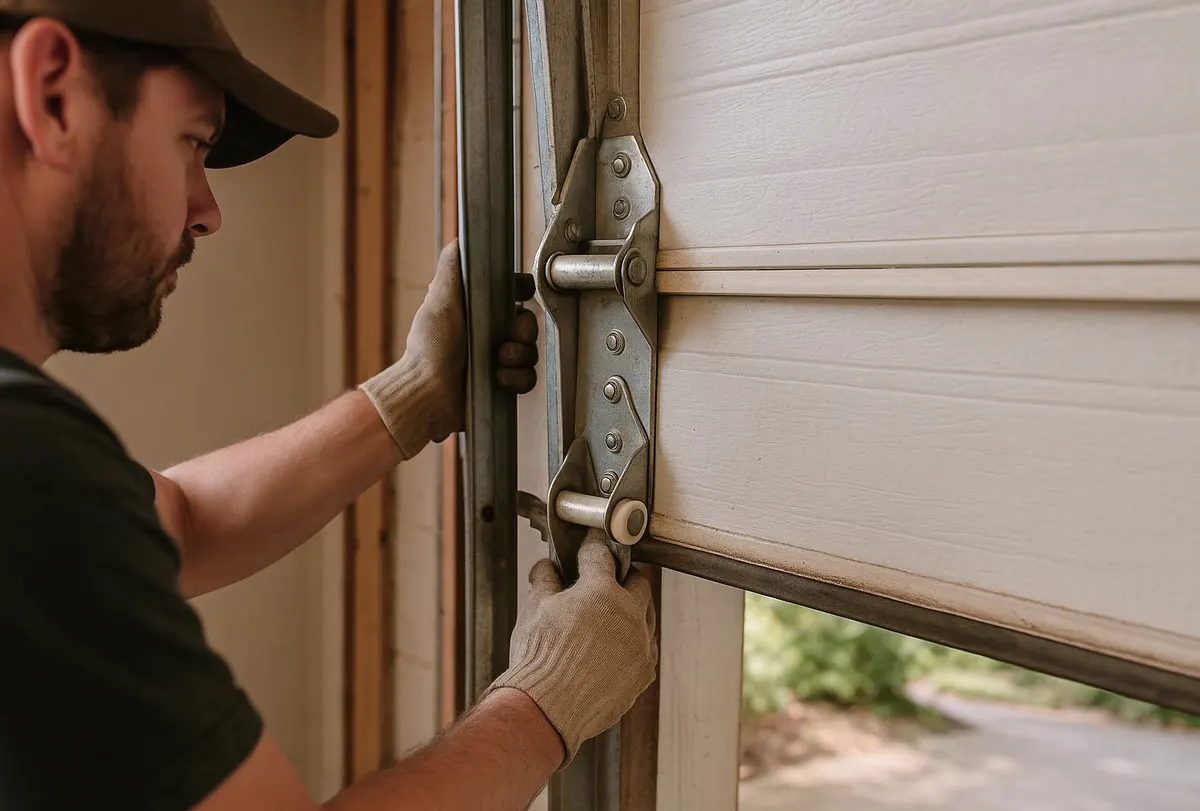
You're standing in the driveway watching the door shudder halfway up, then stop. Or maybe you just noticed the bottom panel is bowed and rusted at the edges, and the whole thing looks tired next to the rest of the house. That's usually the moment a repair call turns into a bigger question: what does it actually cost to replace this thing?
The honest answer is it depends, but not in a vague way. A handful of specific factors move the price up or down, and once you know what they are, the range makes a lot more sense.
What Drives the Price of a New Garage Door
Before getting into dollar figures, it helps to know what you're actually paying for. The same size opening can swing from a modest investment to several times that, depending on:
- Material — steel, aluminum, wood, composite, or fiberglass, each with different upfront cost and long-term upkeep
- Insulation — single-layer versus double-layer construction with a polyurethane or polystyrene core
- Size — a single-car door costs less than a double-wide, and oversized or custom openings cost more than standard sizes
- Style and windows — flat panel versus raised panel versus carriage-house detailing, plus decorative glass inserts
- Hardware — faux or real carriage hardware, handles, hinges, and decorative straps add up
- Wind-load rating — doors engineered to meet higher wind-pressure requirements use heavier gauge steel and reinforced tracks, which costs more than a standard residential door
- Opener — whether you're keeping your existing opener or installing a new one with the door
- Removal and disposal — hauling away the old door and track
Labor is part of every one of these line items too. A straightforward swap on an existing opening is quicker and cheaper than a job that also involves resizing the frame, replacing rotted trim, or running new wiring for an opener.
Cost Ranges by Door Type
These are national ranges for materials plus installation, meant to give you a realistic starting point for comparison shopping. Treat them as a planning tool, not a quote.
- Basic steel, non-insulated: roughly $700–$1,600 installed. This is the workhorse option — a single flat or raised-panel steel door, no frills.
- Insulated steel: roughly $1,000–$2,500 installed. Worth it if the garage is attached to living space or you park a vehicle that doesn't love temperature swings.
- Wood composite or faux wood (steel core with a wood-look overlay): roughly $1,500–$3,500 installed. Gives you the look of wood with steel's lower maintenance.
- Carriage style (steel or composite, with hardware and often windows): roughly $2,000–$5,000 installed. This is the style most homeowners picture when they say they want to upgrade curb appeal.
- Custom or solid wood: roughly $3,000–$10,000+ installed. Real wood looks excellent but needs the most ongoing maintenance in a humid climate.
Double-wide doors generally run higher than single doors within each category, and adding windows, decorative hardware, or a higher wind-load rating pushes any of these ranges toward the top end.
Extra Costs Worth Budgeting For
A few add-ons catch people off guard if they're not factored in early:
- New opener: a quality opener with battery backup typically adds a few hundred dollars to the project if you're not reusing the existing one.
- Track and spring upgrades: if your current springs or tracks aren't rated for the new door's weight, those get replaced too.
- Trim and frame repair: wood trim around garage openings in this climate often has some rot or swelling by the time a door is replaced, and that repair is usually billed separately.
- Haul-away fee: some installers include it, some charge extra — ask upfront.
Why Humidity and Storms Change the Math Here
Central Florida's climate affects both the choice of door and its lifespan. Afternoon humidity and heavy rain during storm season cause wood doors and wood trim to swell and warp faster than they would in a drier climate, which is why composite and steel options tend to hold up better here with less upkeep. If your home is closer to the coast, salt-laden air accelerates rust on hinges, tracks, and lower panel edges, so a factory-applied galvanized or powder-coated finish earns its keep.
Wind-load requirements are another real factor in this region. A door built to withstand hurricane-force wind pressure uses heavier steel, reinforced struts, and stronger track hardware — all of which add cost but matter during storm season. When you're comparing quotes, make sure you're comparing doors with the same wind rating, not just the same size and style.
When to Call De Leon Springs Overhead Door Co
If your current door is sagging, rusted through at the bottom, or struggling to open smoothly no matter how many times it's been adjusted, it's worth getting an opinion on repair versus replacement before spending money twice. De Leon Springs Overhead Door Co offers Garage Door Installation & Replacement for homeowners ready to upgrade, and Garage Door Maintenance & Tune-Up service for doors that just need springs, rollers, and tracks brought back into proper working order. We'll walk the door with you, point out what's fixable and what's not, and give you options that fit both your budget and our local wind and weather conditions.
If you're in De Leon Springs, DeLand, Orange City, Deltona, Lake Helen, Barberville, Pierson, or DeBary and you're ready to talk through a new door or get your current one back in shape, give De Leon Springs Overhead Door Co a call. We'll come take a look and give you a straight answer.