
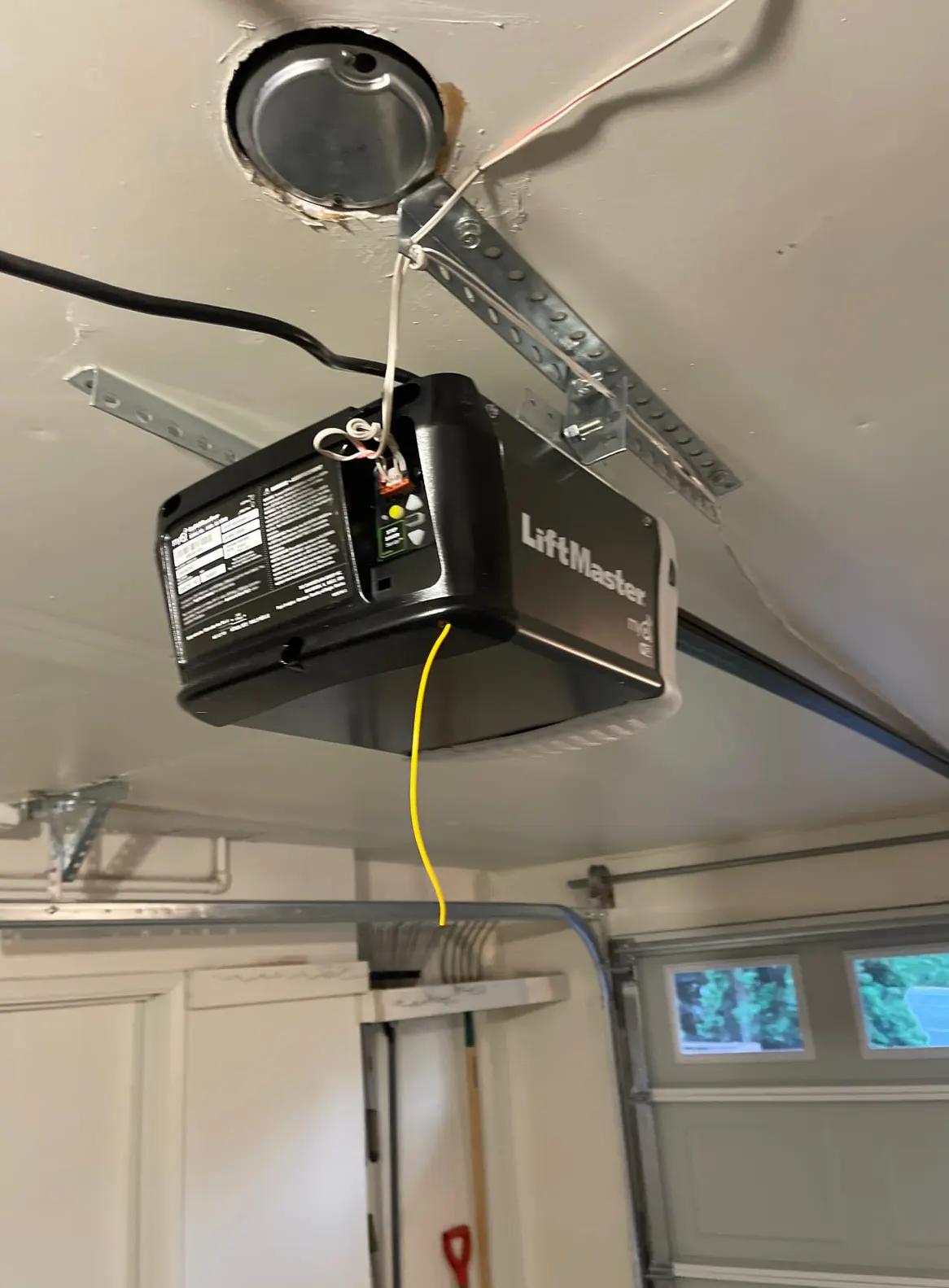
The sky goes dark, the AC clicks off, and you grab the garage door remote out of habit. Nothing happens. You try the wall button inside the garage. Still nothing. Your car is sitting in there, you need to get to work or pick up the kids before the next band of rain hits, and the door won't move an inch. If you've lived through a hurricane-season outage in De Leon Springs, this scene probably feels familiar.
The good news: every garage door opener has a manual release built in for exactly this situation. You don't need electricity to open or close your garage door by hand. You do need to know the right steps, in the right order, so you don't jam the track or strain the springs.
Tools You'll Need
- A sturdy step stool (most release cords hang a bit higher than arm's reach)
- A flashlight or phone light, since outages often mean a dark garage
- Work gloves, especially helpful if the door has been exposed to humidity and the track has any rust on it
- Nothing else — no special tools required for the basic release
Step 1: Find the Emergency Release Cord
Look at the trolley — the part that rides along the metal rail connecting your opener to the door. Hanging from it is a cord, usually red, with a handle on the end. That cord disconnects the door from the opener's drive mechanism so you can move the door by hand.
Step 2: Support the Door Before You Pull the Cord
This step gets skipped more than any other, and it's the one that causes injuries. Before you pull the release, make sure the door is fully closed, or have someone hold it steady if it's partway open. Once you disengage the trolley, nothing but the springs and your own strength is holding that door up. If a spring is weak, worn, or already showing signs of wear, the door can drop fast.
Step 3: Pull the Release Cord Straight Down
Pull it firmly toward you until you hear or feel the trolley disconnect from the chain or belt. The door is now in manual mode.
Step 4: Lift or Lower the Door by Hand
- Grip the door at the bottom handle or edge, not the panels, which can flex or dent.
- Lift smoothly and evenly. A properly balanced door should rise with moderate effort and stay roughly where you stop pushing it.
- If the door feels heavy, jerks, or won't stay up on its own, stop. That's a sign of spring trouble, not something to force through.
- To close, lower it the same way, keeping both hands clear of the track and bottom edge as it seats against the floor.
In De Leon Springs' humidity, tracks can hold moisture and swell slightly, especially after a run of afternoon downpours. If the door sticks or binds partway through its travel instead of moving smoothly, don't force it — that's often an off-track or alignment issue rather than something a little extra muscle will fix.
Step 5: Secure the Door if You're Leaving It
If you need to leave the house while the power is still out, close the door fully and, if your model has one, engage the manual lock bar on the inside. This matters more during storm season, when wind load against a closed-but-unlatched door can work it loose over time.
Re-Engaging the Opener Once Power Returns
This part trips people up because they assume the opener reconnects automatically. It doesn't.
- Make sure the door is fully closed.
- Pull the emergency release cord again, but this time toward the door (or follow the direction your specific model indicates) to reset the trolley toward the reconnect position.
- Use the wall button or remote to run the door through one full open-close cycle. Listen for the trolley to click back into the chain or belt.
- Watch the first cycle closely. The door should move at its normal speed and stop at the usual points. If it stutters, reverses unexpectedly, or doesn't fully seat the trolley, don't keep cycling it — repeated attempts can strip the trolley mechanism.
If your opener has battery backup, which is common in Florida installations given how often storms knock out power for hours at a time, check that the backup battery held a charge and reset any blinking indicator lights per the manual.
What's Safe for a Homeowner vs. What Needs a Technician
Pulling the release cord, manually opening or closing the door, and running the reconnect cycle are all tasks a homeowner can handle safely. What's not a DIY job: anything involving the torsion springs themselves, a door that won't stay balanced when lifted by hand, a trolley that won't reconnect after several careful attempts, or a track that's visibly bent or pulled away from the wall. Springs are under heavy tension and off-track doors can shift unpredictably — both are technician territory.
When to Call De Leon Springs Overhead Door Co
If your door felt unusually heavy during the manual lift, wouldn't hold its position, or the opener never fully reconnected after power came back, it's worth having someone look at it before the next storm rolls through. We handle Garage Door Spring Repair for doors that are out of balance, and Off Track Door Repair for doors that bind or jump the rail, which shows up more often here given the swelling and movement that come with Volusia County's humidity and rain cycles. We serve De Leon Springs, DeLand, Orange City, Deltona, Lake Helen, Barberville, Pierson, and DeBary.
If this outage left your door acting up, call De Leon Springs Overhead Door Co today and we'll get it running smoothly before the next band of weather comes through.